

- Iconic Asheville
- Things to Do
- Trip Ideas
- Event Calendar
- Places to Stay
-
Food & Drink
-
Meet the Foodtopians
- 12 Bones Smokehouse
- 67 Biltmore
- Addison Farms Vineyard
- Asheville Distilling Company
- Biltmore
- Biltmore Coffee Traders
- Blue Ridge Food Ventures
- Bouchon
- Burial Beer Co.
- The Cantina
- Carolina Bison
- Chai Pani, Botiwalla & Spicewalla
- The Chocolate Fetish
- Corner Kitchen & Chestnut
- Cucina 24
- Cúrate
- Farm & Sparrow and All Souls Pizza
- Gan Shan Station
- Green Sage Cafe
- French Broad Chocolate Lounge
- Hickory Nut Gap Farm
- Highland Brewing Company
- HomeGrown
- Isa’s Bistro
- Jerusalem Garden Cafe
- Little Pigs BBQ
- The Lobster Trap
- Luella’s Bar-B-Que
- The Market Place
- No Taste Like Home
- Omni Grove Park Inn
- Posana
- Rhubarb
- Rocky’s Hot Chicken Shack
- Rosetta’s Kitchen
- Short Street Cakes
- Sunburst Trout Farms
- Sunny Point Café
- Tupelo Honey Cafe
- Urban Orchard Cider Co.
- Vinnie’s Neighborhood Italian
- Vortex Doughnuts
- Well-Bred Bakery & Cafe
- Wicked Weed Brewing
- Restaurants
- Beer Scene
- Wine & Craft Beverage
- Food Adventures & Culinary Experiences
- Farms & Farmers Markets
- Recipes
-
Meet the Foodtopians
- Great Outdoors
- Packages & Deals
Alan Muskat
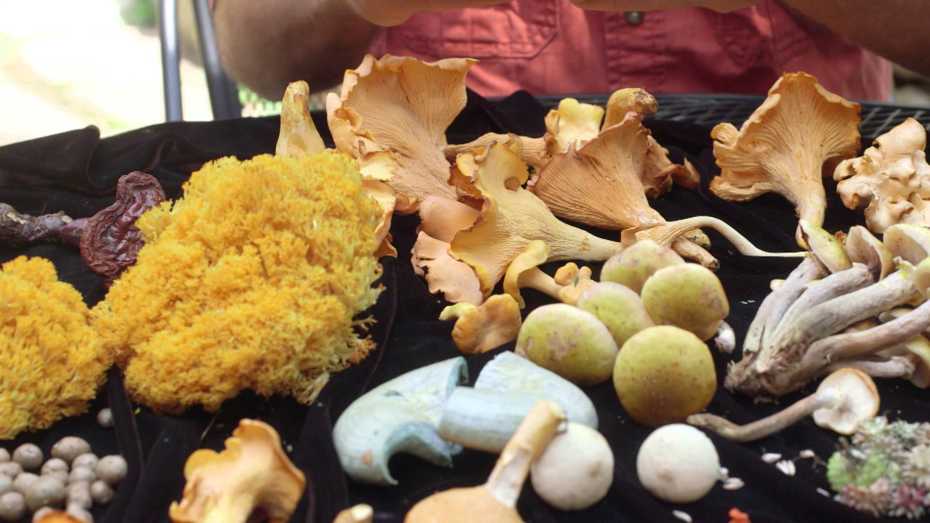
Termites, thumb-sized green tomato worms, garden slugs, inky black mushrooms — Alan Muskat has eaten them all. As Asheville's resident forager, he finds, identifies and eats wild mushrooms, fruits, greens, nuts, seeds, flowers and shoots.
In all, over 300 edible species grow in the Asheville area, and Muskat reveals them through his tour company, No Taste Like Home. “Wild food is not difficult to find, and most of it grows in the city,” he says. “This Garden of Eden we live in here is very real, and the foundation is natural.”
Muskat started foraging for his own table in 1992, and over the following years, he began offering classes. Recently, he's witnessed a surge of interest in foraging. He attributes the trend to an increased focus on economics, health and environment: Wild food is free, pure and easy on the planet.
Asheville offers plenty of inspiration for the forager; Muskat has lived here 20 years, and he's still exploring. These mountains are one of the most bio-diverse regions in the world, he says, with more plant and animal species than just about anywhere except a tropical rainforest.
The landscape creates a place for creativity both in nature and in business, Muskat explains. “People throughout history have come here to do their own thing,” he says. “The reason the Scotch-Irish came here was because there are a lot of nooks and crannies. That's what also creates the natural diversity: micro-climates. There's a lot of other cities that can have a beer scene or a foodie scene, but when that kind of homegrown, do-it-yourself attitude is rooted in the geography, then you really have a foundation for something interesting.”


Alan Muskat


Cookies are used for measurement, ads and optimization. By continuing to use our site you agree to our Cookies are used for measurement, ads and optimization. By continuing to use our site you agree to our privacy policy.



For Visitors
For Media
For Planners